
Choosing an engagement ring from a display case is straightforward, but it can also mean accepting design decisions someone else has already made. Custom engagement rings give couples more control over the centre stone, setting, metal, proportions and small details that determine how the finished ring actually looks and feels.
For buyers in Malaysia, custom design can be particularly useful when a preferred diamond shape, ring profile, band width or combination of features is difficult to find in a standard collection. The goal is not simply to create something different. A well-designed ring should balance appearance, comfort, durability and budget without adding details that do not improve the finished piece.
Start With the Centre Stone, Not the Setting
The centre stone usually has the strongest influence on the appearance of an engagement ring. Its shape, dimensions and proportions can determine which settings work well around it.
Lab-grown diamonds are one option for buyers who want diamond material with the same fundamental crystal structure and carbon composition associated with mined diamonds but a different origin. They are grown under controlled conditions, commonly using Chemical Vapour Deposition (CVD) or High Pressure High Temperature (HPHT) processes.
Neither growth method automatically produces a better diamond. Individual stones should still be judged on their quality characteristics.
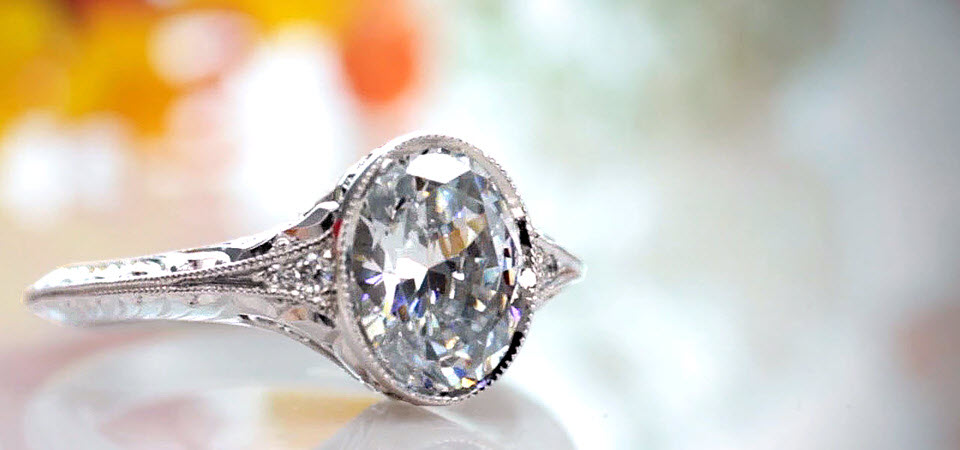
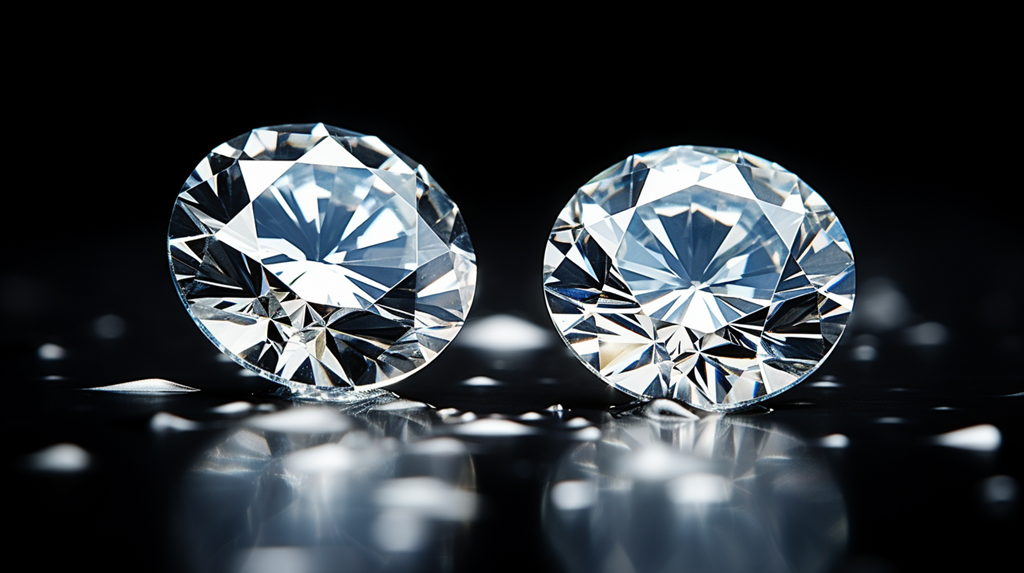
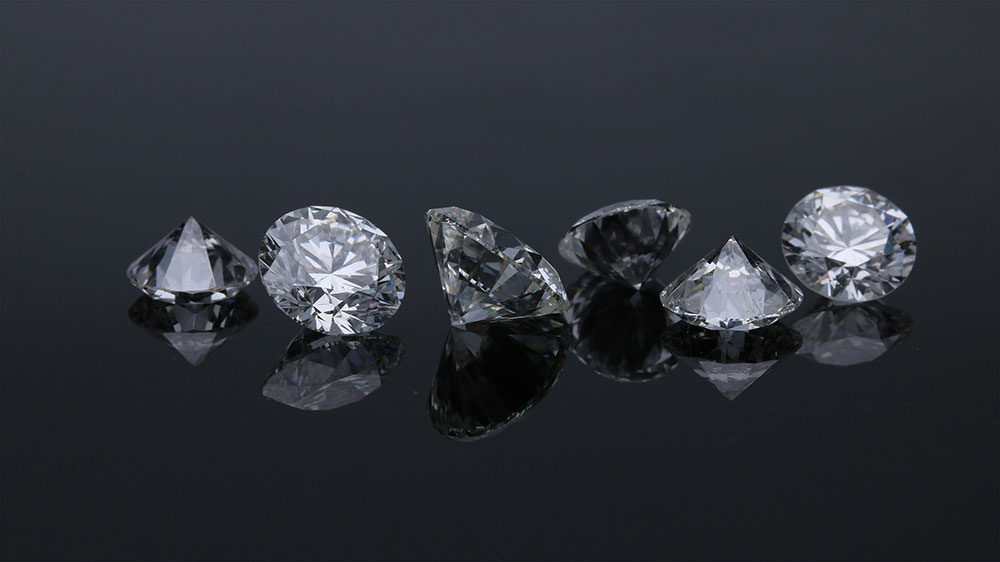
Common diamond shapes for engagement rings include round brilliant, oval, emerald, cushion, radiant, pear and princess cuts. Shape affects more than style. An elongated oval or pear diamond, for example, can create a different visual spread on the finger than a round diamond of the same carat weight.
Carat is a measure of weight, not visible dimensions, so two diamonds with identical carat weights can look noticeably different once set.
Use the 4Cs to Make Better Design Decisions
Diamond selection becomes easier when the 4Cs are treated as connected characteristics rather than four independent grades.
Cut describes how effectively a faceted diamond’s proportions and craftsmanship influence its light performance. For many brilliant-style diamonds, cut quality has a major effect on brightness and sparkle.
Colour refers to the amount of colour present or absent according to the grading system used. The setting metal can influence how noticeable subtle colour differences appear.
Clarity evaluates internal inclusions and external blemishes. A very high clarity grade is not automatically necessary for an attractive engagement ring. Some diamonds with lower clarity grades may appear clean to the unaided eye while costing less than stones with technically higher grades.
Carat weight measures weight. It should be considered alongside measurements and proportions rather than used as the only indicator of apparent size.
For a custom ring, these factors should also be considered in relation to the setting. A design that exposes more of the centre stone may make certain characteristics more visible than a setting that surrounds it with additional diamonds.
Choose a Setting Around Daily Wear
A ring can look impressive in a render or jewellery display but still be inconvenient for everyday wear. Setting height, stone exposure and band construction matter.
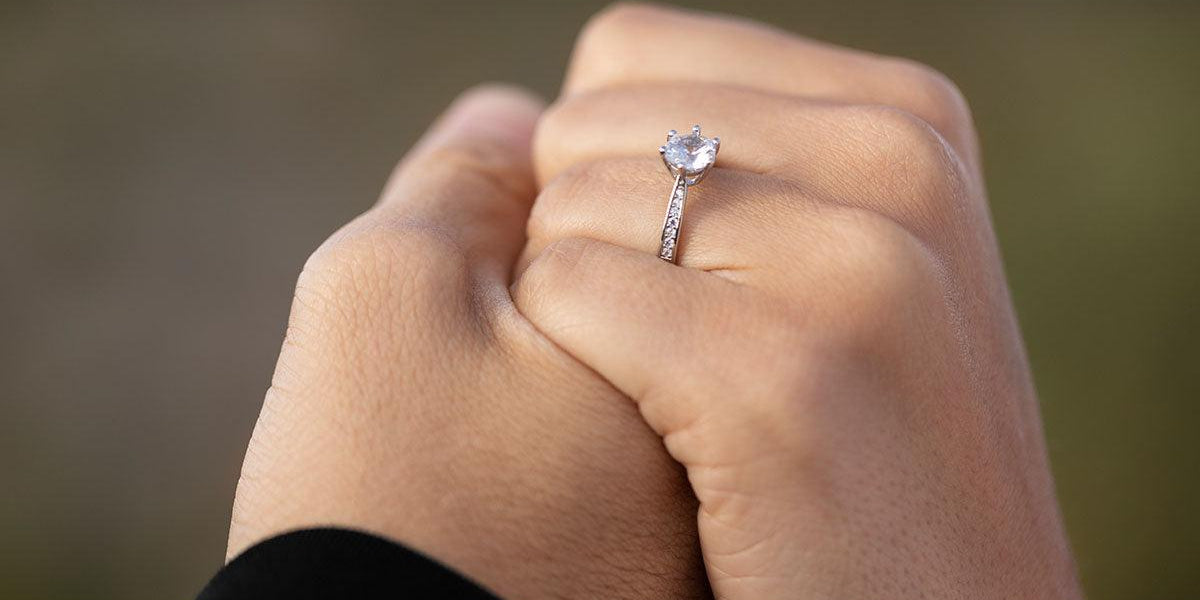
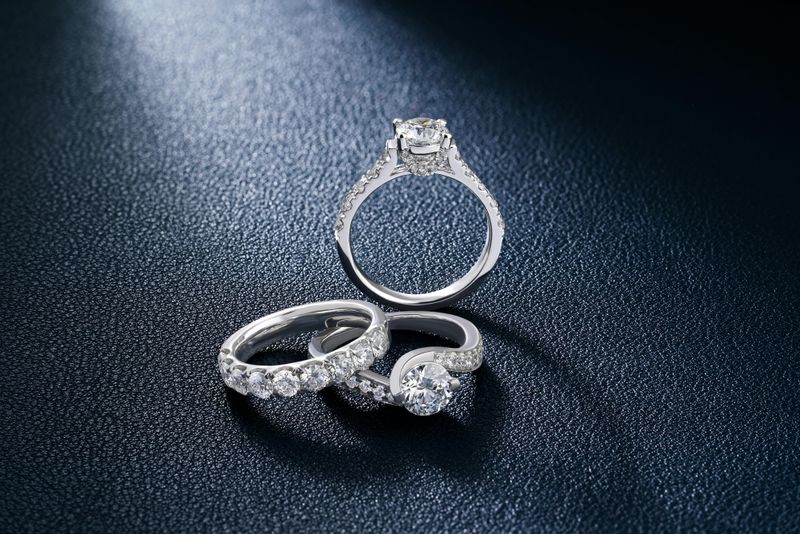
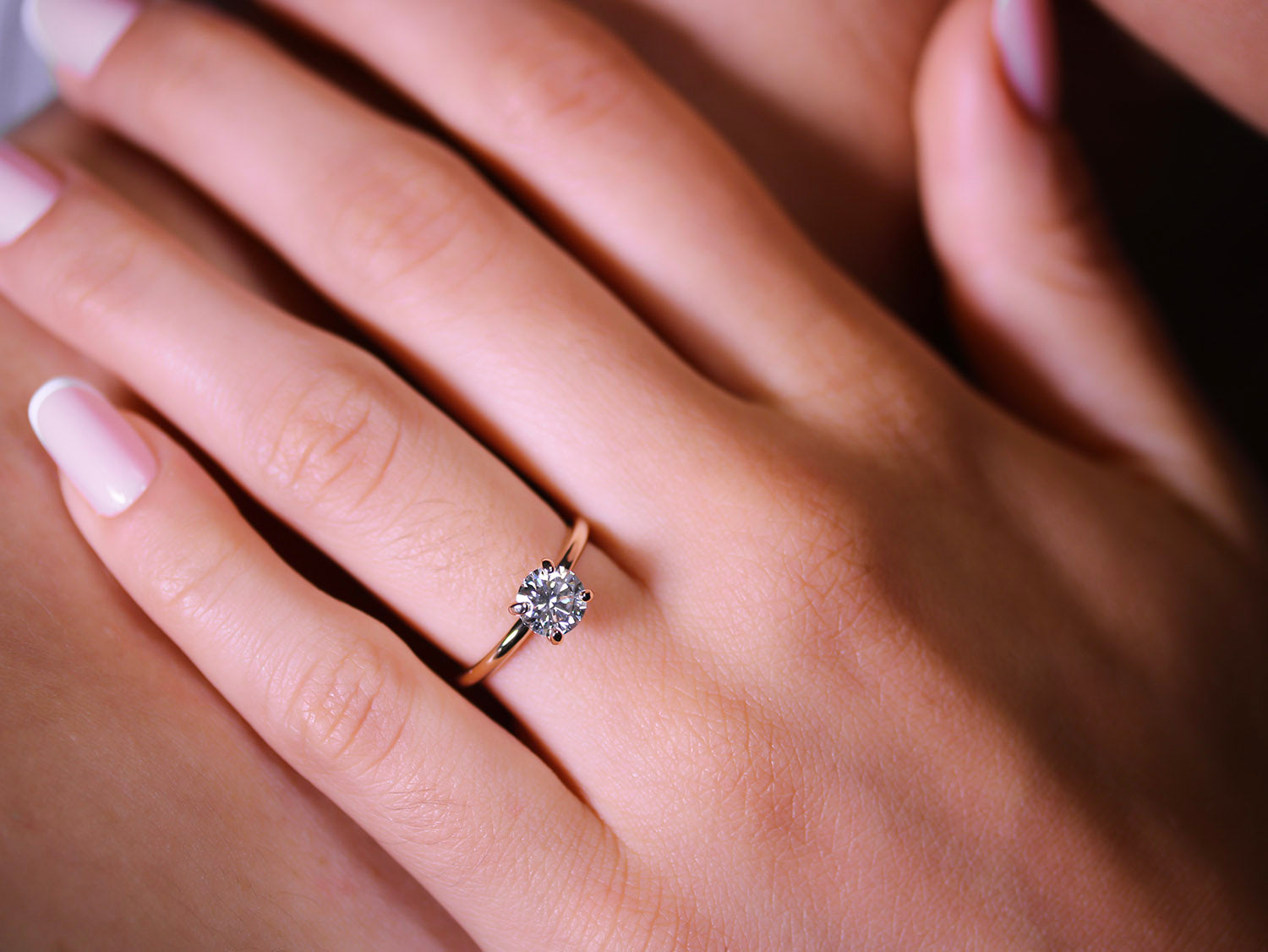
A solitaire keeps attention on one centre diamond and often creates a clean appearance. A halo adds smaller stones around the centre and can make the overall top surface of the ring appear larger. Pavé designs add small stones along the band, while bezel settings surround more of the centre stone’s edge with metal.
A three-stone ring creates a wider visual composition and offers more opportunities to combine shapes.
When researching custom engagement rings, it is useful to compare setting styles alongside practical factors such as ring height, cleaning access, stone protection and compatibility with a future wedding band.
Someone who frequently works with their hands may prefer a lower-profile design with fewer exposed elements. Someone focused on a delicate appearance may accept that intricate pavé details can require more careful maintenance.
Match the Metal to the Design
Metal choice changes the visual character of a ring and can affect its weight, maintenance and overall construction.
White gold provides a bright neutral appearance that works easily with colourless-looking diamonds. Yellow gold creates stronger contrast between the band and the stone, while rose gold introduces a warmer tone. Platinum is another common choice for engagement rings and has a naturally white appearance.
The best option depends on the design rather than a universal hierarchy.
A thin band may create an elegant appearance, but very fine proportions need to be considered alongside the size of the centre stone and the structural requirements of the setting. Wider bands can have more visual presence but may feel different on the finger.
For a custom piece, the jeweller should also know whether a matching wedding band is planned. A high-profile centre setting may allow a straight wedding band to sit close against the engagement ring, while some low or unusual settings may require a curved or specially shaped band.
Why Diamond Grading Reports Matter
A grading report helps buyers compare diamond characteristics using documented information rather than relying only on appearance or sales descriptions.
Depending on the grading laboratory and stone, a report may include details such as:
- carat weight
- colour grade
- clarity grade
- measurements
- proportions
- polish and symmetry
- fluorescence
- identifying characteristics
- laboratory-grown origin
- report number
Recognised laboratories such as IGI and GIA grade laboratory-grown diamonds.
A grading report should not be confused with an appraisal. The report describes characteristics according to the laboratory’s grading methodology, while an appraisal typically concerns estimated financial or replacement value for a different purpose.
Where a report number or laser inscription is available, buyers can ask how the information can be matched to the diamond being supplied.
Custom Design Does Not Mean Adding More Details
One of the most common mistakes in personalised jewellery is assuming that a custom ring needs numerous decorative features.
Good custom design often depends on proportion and restraint.
A carefully selected centre stone on a simple band can be more distinctive than a ring combining a halo, hidden halo, pavé shoulders, side stones and elaborate metalwork at the same time.
Before approving a design, consider:
- how wide the band should appear from above
- how high the centre stone sits
- whether the ring catches easily on clothing
- how the side profile looks
- whether accent stones are wanted
- how easy the ring will be to clean
- whether future resizing may be necessary
Small construction choices can have more effect on everyday satisfaction than additional decorative elements.
Compare Lab-Grown and Natural Diamonds by More Than Origin
Lab-grown and natural diamonds share important physical, chemical and optical characteristics, but their origins differ.
Natural diamonds form through geological processes, while laboratory-grown diamonds are produced under controlled conditions. Reliable origin identification may require professional equipment and grading analysis; consumers cannot always determine origin just by looking at a stone.
Lab-grown diamonds should also be distinguished from simulants such as moissanite and cubic zirconia. These are different materials, even though they may be used as diamond alternatives in jewellery.
Price structures and resale markets can also differ between laboratory-grown and mined diamonds. Neither category should automatically be treated as an investment, and the original retail price should not be assumed to represent future resale value.
For custom design, origin is one decision among several. Cut quality, dimensions, shape, setting construction and personal style can have a greater direct effect on how the finished ring looks on the hand.
Review the Ring Before Approving Production
Custom work involves decisions that may be difficult or expensive to change after production begins.
Ask for clear information about the centre lab made diamonds, setting dimensions and metal specification. Where digital renders or computer-aided design drawings are provided, remember that an enlarged screen image may make small design elements look thicker or more prominent than they will appear on the finished ring.
Confirm the ring size and clarify whether resizing is possible for the chosen design. Bands with extensive pavé stones or unusual construction can sometimes be more complex to resize than simple bands.
Buyers should also review the retailer’s stated return, resizing, warranty and after-sales terms rather than assuming that custom pieces follow the same policies as standard inventory.
Novita Diamonds serves the Malaysian market with lab-grown diamond and engagement-ring options, making the brand contextually relevant for buyers comparing diamond specifications, shapes and ring designs before commissioning a personalised piece.
Design for the Person Who Will Actually Wear It
The most useful design question is not which ring looks most impressive in isolation. It is which ring suits the wearer’s preferences and daily routine.
Someone who likes understated jewellery may prefer a solitaire with a narrow band. Another person may want an oval centre diamond with a hidden halo, or a three-stone design with stronger visual presence.
Finger proportions can also influence preferences. Elongated shapes such as oval, pear and marquise diamonds create different visual effects from square or round shapes, but no shape is universally more flattering.
A custom ring works best when every design choice has a reason: the centre stone suits the preferred appearance, the setting works with the wearer’s lifestyle, the metal supports the visual style, and the proportions feel balanced rather than crowded.